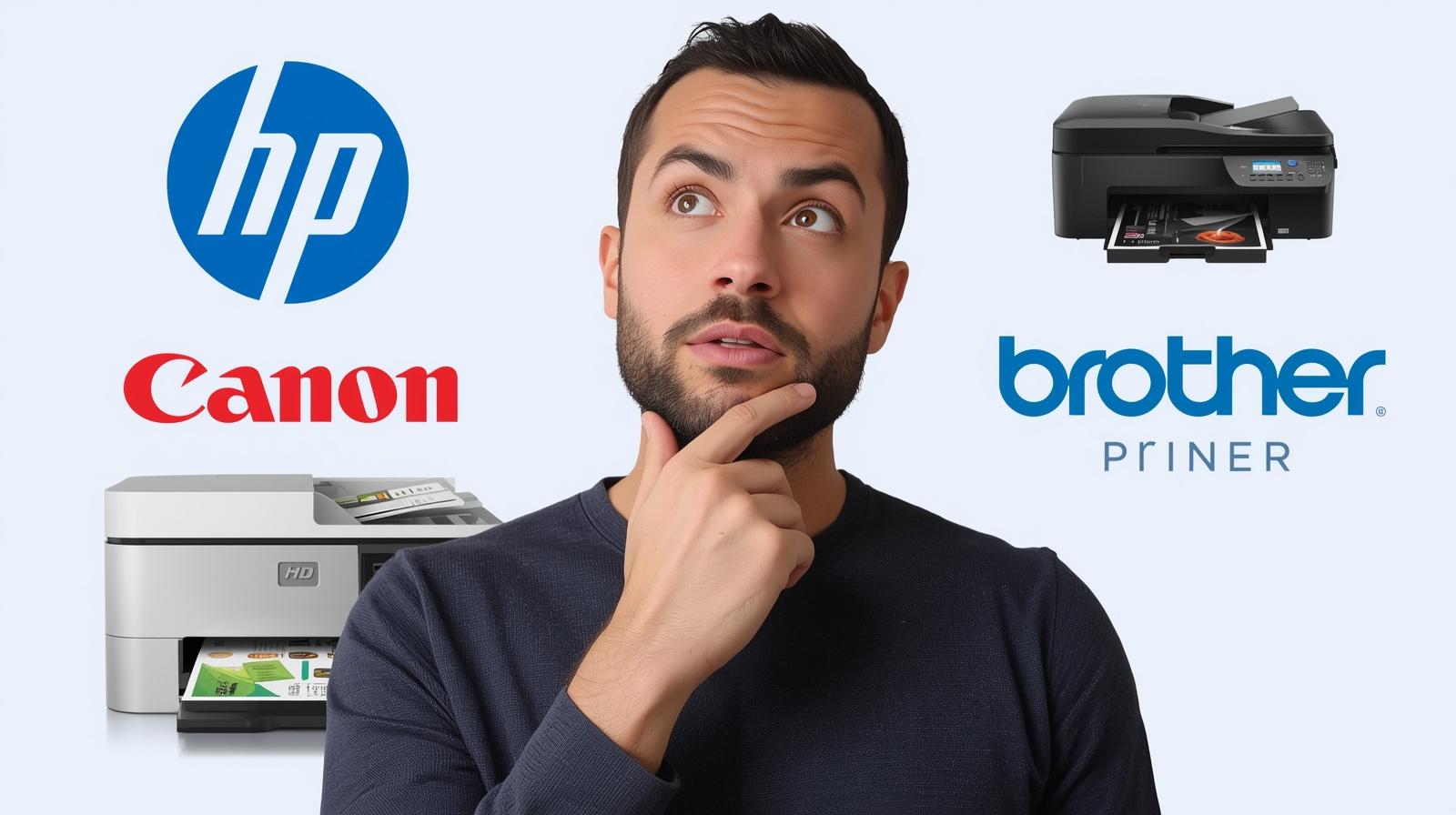


Running a small business in Nigeria comes with many challenges, power fluctuations, rising operational costs, and the need for reliable tools that deliver professional results without breaking the bank. One of the most important investments you can make is choosing the right printer. Whether you print invoices, marketing flyers, reports, or training materials, the wrong printer can drain your budget through high running costs or frequent breakdowns. In this comprehensive 2026 guide, we compare the top printer brands and models popular among Nigerian small businesses and SMEs: HP, Canon, Brother, and Epson. We focus on real-world factors that matter most to Nigerian users: print speed, cost per page, durability in our environment, connectivity, and overall value for money.

Why Choosing the Right Printer Matters for Small Businesses in Nigeria

Small businesses and SMEs in Nigeria typically print between 500 and 5,000 pages per month. You need a machine that balances:

    • Low running costs (especially toner/ink)
    • Fast printing for daily operations
    • Reliability during power outages (with good energy efficiency)
    • Easy connectivity (Wi-Fi, USB, mobile printing)
    • Affordable upfront price

Laser printers generally offer lower long-term costs for high-volume black-and-white printing, while ink tank (EcoTank/Supertank) models are better for colour work on a budget.

Top Printer Recommendations for Small Businesses in Nigeria 2026

Here’s our curated comparison of the best options based on performance, Nigerian market availability, and value:

1. HP LaserJet Pro Series (e.g., MFP M428fdw or similar 2026 models)

    • Best for: Medium-volume offices needing fast monochrome printing.
    • Key Features: Up to 40 pages per minute (ppm), automatic duplex printing, Wi-Fi + Ethernet, strong security features.
    • Cost per Page: Very low with original or high-yield toners.
    • Price Range in Nigeria: ₦300,000 – ₦450,000.
    • Pros: Reliable, fast, professional output.
    • Cons: Higher initial cost than ink tank models.
    • Ideal for: Accounting firms, law offices, and busy SMEs. Quickly follow link and get your high quality HP Pro 4001n and start enjoying the benefits (https://amzn.to/4e5EmqG)

2. Canon PIXMA G Series / MAXIFY GX Series (Ink Tank Models)

    • Best for: Color printing on a budget.
    • Key Features: High-yield ink tanks (up to 7,000–18,000 pages), wireless printing, scan/copy functions.
    • Cost per Page: Extremely low (one of the cheapest for color).
    • Price Range in Nigeria: ₦180,000 – ₦350,000.
    • Pros: Excellent for marketing materials, flyers, and color documents.
    • Cons: Slower than laser for high-volume black-and-white.
    • Ideal for: Retail shops, creative agencies, and schools needing occasional color prints.

3. Brother DCP / MFC Laser Series (e.g., DCP-L2550DW or MFC equivalents)

    • Best for: Reliable all-in-one performance at mid-range price.
    • Key Features: Fast laser printing, automatic document feeder, robust build quality.
    • Cost per Page: Competitive with HP.
    • Price Range in Nigeria: ₦250,000 – ₦400,000.
    • Pros: Durable, low maintenance, good for shared office use.
    • Cons: Color options can be more expensive.
    • Ideal for: Churches, small NGOs, and growing SMEs.

4. Epson EcoTank Series (e.g., L3150, L3250, or 2026 updates)

    • Best for: High-volume color printing with minimal running costs. 
    • Key Features: Refillable ink tanks, borderless printing, wireless connectivity.
    • Cost per Page: Among the lowest for color work.
    • Price Range in Nigeria: ₦150,000 – ₦300,000. Pros: Great value for color-heavy jobs.

Printer model Type   Print Speed   Best For   Estimated Price (₦)   Cost per Page  
HP LaserJet Pro MFP M428fdw Laser 40 ppm Office documents 300,000–450,000 Very Low
Canon PIXMA G/Maxify GX Ink Tank 8–15 ppm Color & marketing 180,000–350,000 Low
Brother DCP-L2550DW Laser 36 ppm Reliable all-in-one 250,000–400,000 Low
Epson EcoTank L3250/L series Ink 10–15 ppm High-volume color 150,000–300,000 Very Low

Must-Have Accessories to Complete Your Setup
Once you’ve chosen your printer, these complementary tools will help you protect your investment and work more efficiently:

  • A reliable surge protector is essential in Nigeria due to frequent power fluctuations.
    Check current surge protectors on Amazon: 18 Outlets Surge Protector
  • Microsoft 365 makes it easy to create professional documents and PDFs ready for printing.
    Get Microsoft 365 here (https://amzn.to/3OnPDby)
  • For quick design work before printing, Canva Pro is loved by many Nigerian businesses. Master how to use Canva Pro and create stunning designs here with special pricing (https://amzn.to/4sY24d2)

Our Recommendation

For most small businesses in Nigeria in 2026:

    • Best Overall: HP LaserJet Pro series -balances speed, reliability, and professional output.
    • Best Value for Money: Epson EcoTank or Canon PIXMA G series -lowest running costs.
    • Best for Color Work: Canon MAXIFY GX or Epson EcoTank.

Ready to Upgrade Your Printing Setup?

Choosing the right printer can save your business thousands of naira every month while improving professionalism and efficiency.

At Abiola Prints & Tech Enterprises, we stock a wide range of HP, Canon, Brother, and Epson printers, copiers, toners, and inks. We offer:

    • Honest advice based on your actual print needs
    • Competitive prices with nationwide delivery
    • Free setup and basic training
    • Warranty and after-sales support

Take the next step today:

WhatsApp us at +2349156576950 with your printing requirements (e.g. monthly pages, colour or black-and-white, budget), and we’ll recommend the best option for your business.

You can also browse our current stock on the website or visit our store in Ijesha, Surulere, Lagos.

Don’t let the wrong printer slow down your growth in 2026. Get in touch now and print smarter, not harder.

Disclosure: This article contains affiliate links. If you make a purchase through links provided, Abiola Prints & Tech may earn a small commission at no extra cost to you. We only recommend products we believe will genuinely help your business.


Being a forward thinking organization, at Abiola Prints & Tech we have always been concerned and actively thought about pushing innovations that raises possibilities of printers, the results, and users experience.

However, operating from Nigeria only means that our thoughts in this regard are limited to printer use. This is because Nigeria does not produce printer. Local manufacturing of printers gives a base to develop innovations upon.

This realization stirred the worries within us why we do not/cannot produce printer. On the surface we understand that the reasons are multiple. We took to Grok (xAI) to help with a succinct reasons for why it seems impossible to produce printers in Nigeria. The below is what we found:

Several challenges prevent Nigeria from producing printers domestically:

1. Lack of Advanced Manufacturing Infrastructure:

  • Printer production requires precision engineering, advanced electronics manufacturing, and assembly lines capable of producing complex components like printheads, sensors, and circuit boards. Nigeria’s manufacturing sector is underdeveloped, with infrastructure deficits limiting its capacity for high-tech production. The country’s infrastructure stock is only 30% of GDP, far below the World Bank’s recommended 70%.
  • Stable power supply is a critical issue. Printer manufacturing demands consistent electricity for automated production lines, testing, and quality control, but Nigeria struggles with unreliable power, which affects industrial processes.

2. Limited Technological Expertise and R&D:

  • Producing printers requires expertise in electronics, software development (for printer firmware), and materials science (for components like ink cartridges or toner). Nigeria faces a scarcity of skilled experts in these fields, as seen in related industries like 3D printing, where specialized knowledge is lacking.
  • Research and development (R&D) for printer technology is minimal in Nigeria. Most printer innovations are driven by global companies like HP, Canon, or Epson, and Nigeria lacks the R&D ecosystem to develop proprietary technologies or adapt existing ones.

3. High Costs and Import Dependency:

  • The raw materials and components needed for printer production, such as
    semiconductors, plastics, and specialized inks, are not produced locally and must be imported. Import duties on these materials (ranging from 5-30%) increase costs, making local production less competitive than importing finished printers.
    thecable.ng
  • High-end equipment for manufacturing printers, such as automated assembly lines, is expensive, with costs for similar technologies (e.g., 3D printers) ranging from $100,000 to over $1 million.

4. Underdeveloped Supply Chains:

  • Printer production requires a robust supply chain for components like microchips, sensors, and mechanical parts. Nigeria lacks the local supplier networks to support such a supply chain, leading to reliance on foreign suppliers, which increases costs and logistical challenges.

5. Regulatory and Economic Challenges:

  • While Nigeria has policies to promote technological advancement, such as the National Digital Economy Policy and Strategy 2020-2030, implementation is hampered by bureaucratic inefficiencies and inconsistent policies.
  • Local content regulations, like the Nigerian Oil and Gas Industry Content Development Act, have increased in-country engineering capacity in some sectors, but similar frameworks for electronics or printer manufacturing are absent.
  • Economic volatility and reliance on oil and gas revenue limit government investment in high-tech industries like printer manufacturing.

6. Market and Investment Barriers:

  • The Nigerian market for printers is growing, with the global printing market projected to reach $350.2 billion by 2026 and Africa’s print market expected to surpass $235.3 million by 2031. However, the market is dominated by foreign brands, and local startups lack the capital to compete or innovate in hardware production.
  • Foreign direct investment (FDI) in Nigeria’s tech sector focuses more on telecommunications and digital infrastructure (e.g., broadband expansion) rather than hardware manufacturing.